Tires
How to Check and Set Tire Pressure
Tire pressure drops slowly and you cannot see it. Five minutes a month with a gauge keeps the tires safe and lasting. Here is the routine, with the numbers from NHTSA.
Find the right number first
Step 1: Locate the recommended tire pressure on the Tire and Loading Information Labels on the driver's side door edge or post or in the owner's manual.
National Highway Traffic Safety Administration (NHTSA), Tires (NHTSA TireWise)
(Remember, the correct pressure for your tire is what the vehicle manufacturer has listed, NOT what is listed on the tire itself.)
National Highway Traffic Safety Administration (NHTSA), Tires (NHTSA TireWise)
The figure on the sidewall is the tire's maximum. The figure on the door label is the one your car was built around. Use the door label.
Measure cold, once a month
Check the pressure of all tires, including your spare, at least once a month when the tires are "cold," meaning that the car hasn't been driven for at least three hours.
National Highway Traffic Safety Administration (NHTSA), Tires (NHTSA TireWise)
Driving warms the air in the tire and lifts the reading. Measure in the morning before the first trip. Include the spare.
Underinflated tires are visually difficult to detect. It is recommended that you inspect tires monthly with an accurate gauge.
National Highway Traffic Safety Administration (NHTSA), Tires (NHTSA TireWise)
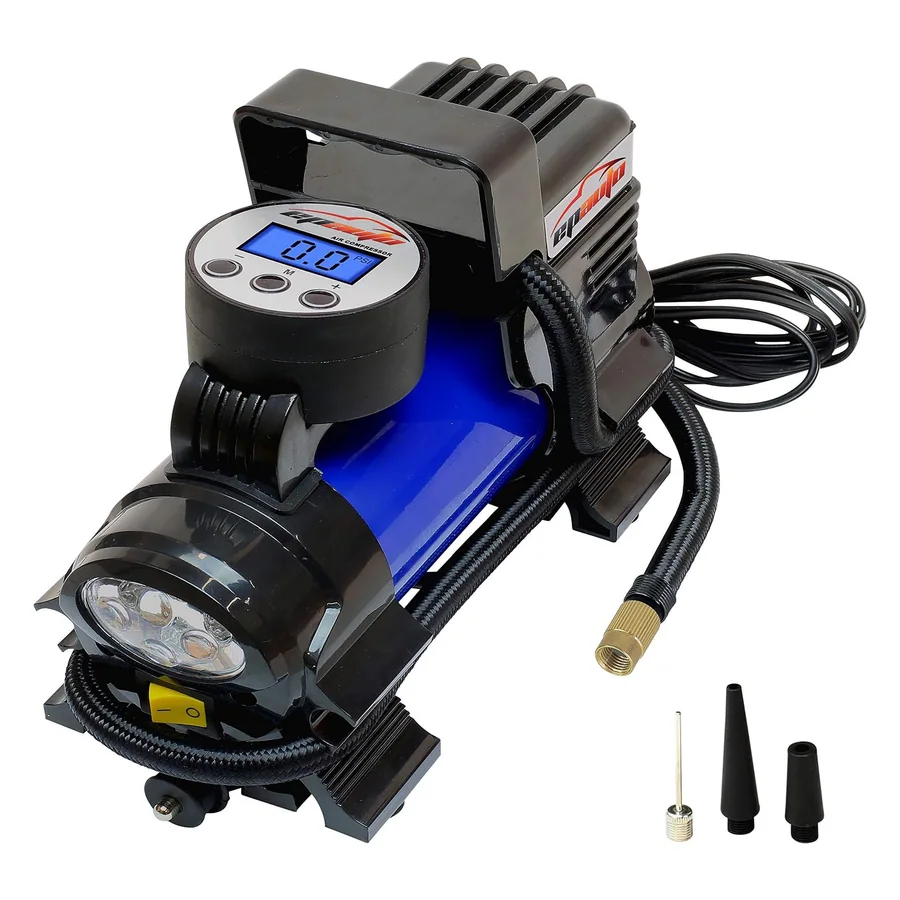
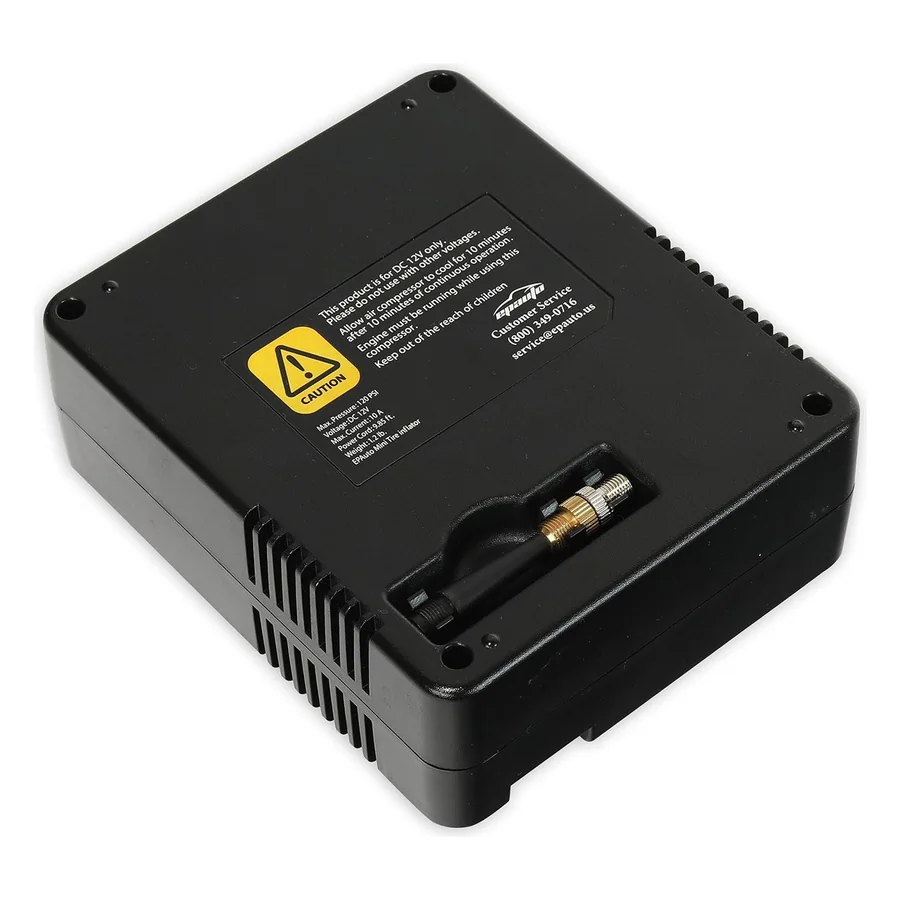
Top up with a 12V inflator
- Plug it inThe EPAuto 12V inflator runs from the lighter socket. Start the engine so the battery does not drain.
- Set the targetDial in the PSI from the door label. The digital model shuts off by itself when it gets there.
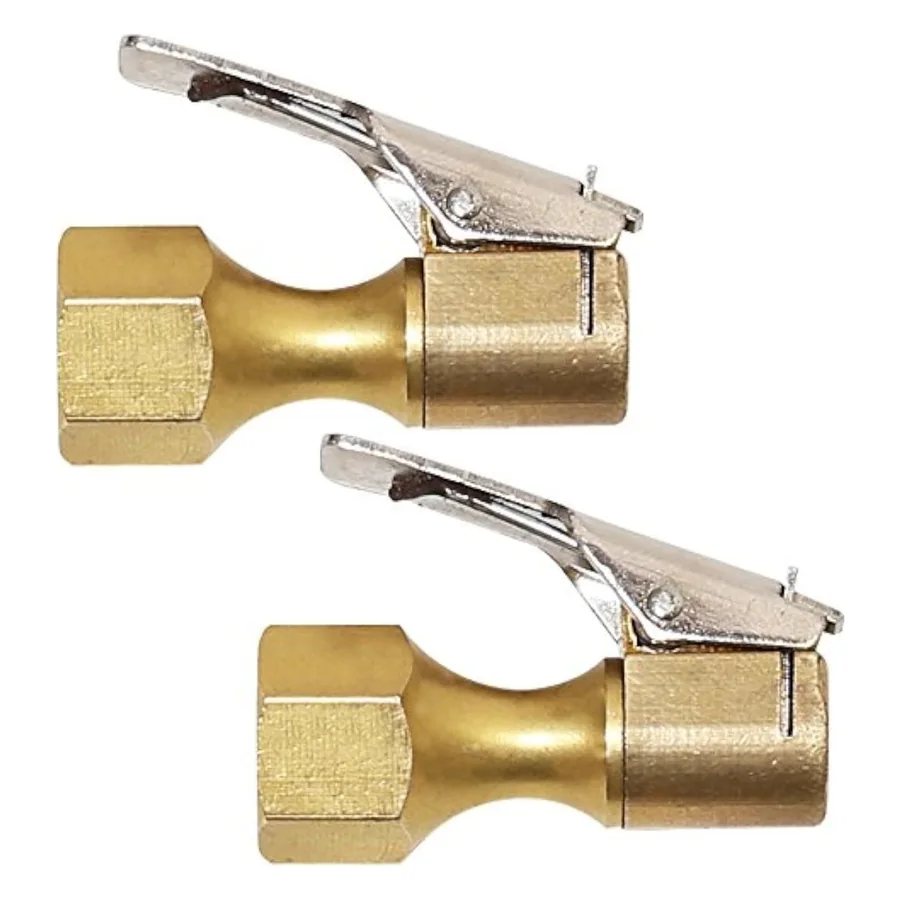
- Screw on and fillThread the hose onto the valve and switch on. Check the reading once it stops, then cap the valve.
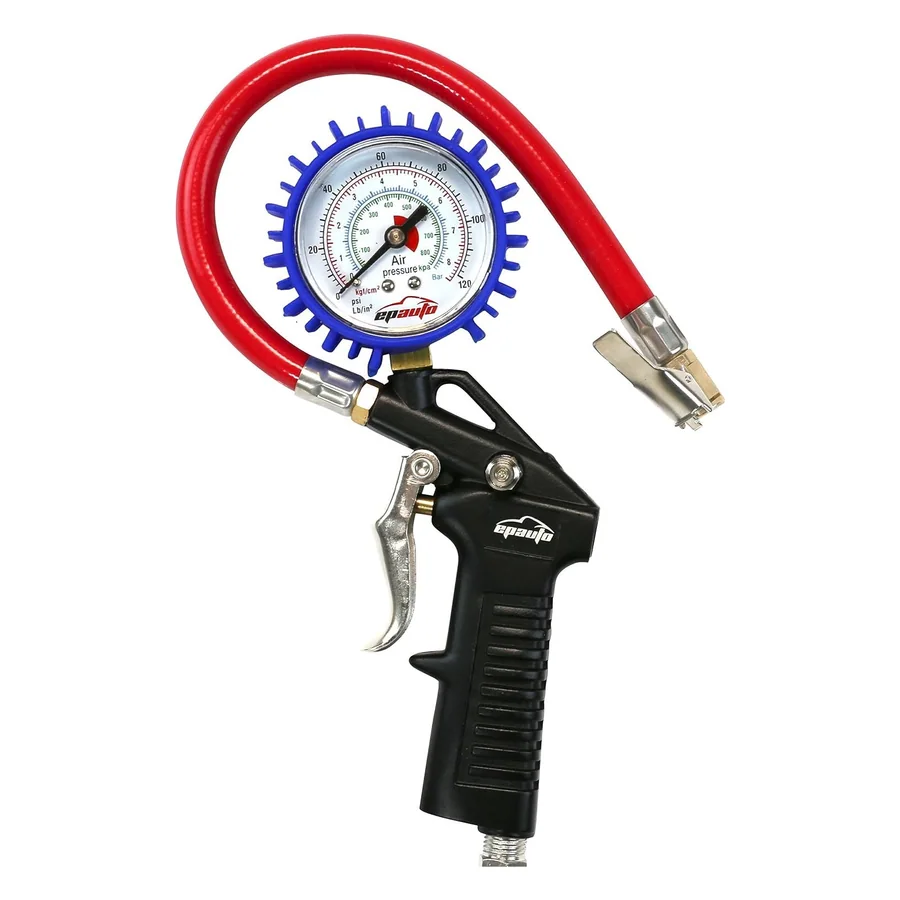
Know the limit of the tool. Our 12V inflators are built for cars, bikes and midsize SUVs. They do not support LT truck tires. For those you need a larger compressor, and our 120 PSI inflator gauge to go with it.
| Tool | Air source | Price |
|---|---|---|
| 12V Digital Tire Inflator | Built-in pump, 12V socket | $35.97 |
| 12V Tire Inflator with Dial Gauge | Built-in pump, 12V socket | $19.97 |
| Tire Inflator Gauge with Hose, 120 PSI | Your compressor | $19.87 |
Why the warning light is not enough
Newer vehicles have Tire Pressure Monitoring Systems, but these only activate a warning when a tire is significantly underinflated.
National Highway Traffic Safety Administration (NHTSA), Tires (NHTSA TireWise)
By the time the light comes on, the tire is already well below its number. The monthly gauge check catches the slow leak weeks earlier.
Poor tire maintenance—not having enough air in your tires and failing to rotate your tires, among other maintenance requirements—can lead to a flat tire, blowout, or the tread coming off your tire.
National Highway Traffic Safety Administration (NHTSA), Tires (NHTSA TireWise)
Quick answers
How often should I check tire pressure?
At least once a month, with the tires cold, and that includes the spare. NHTSA defines cold as not driven for at least 3 hours.
Should I use the PSI printed on the tire?
No. Use the pressure on the label at the driver's door edge or in the owner's manual. An EPAuto 12V digital inflator can then be set to that number.